
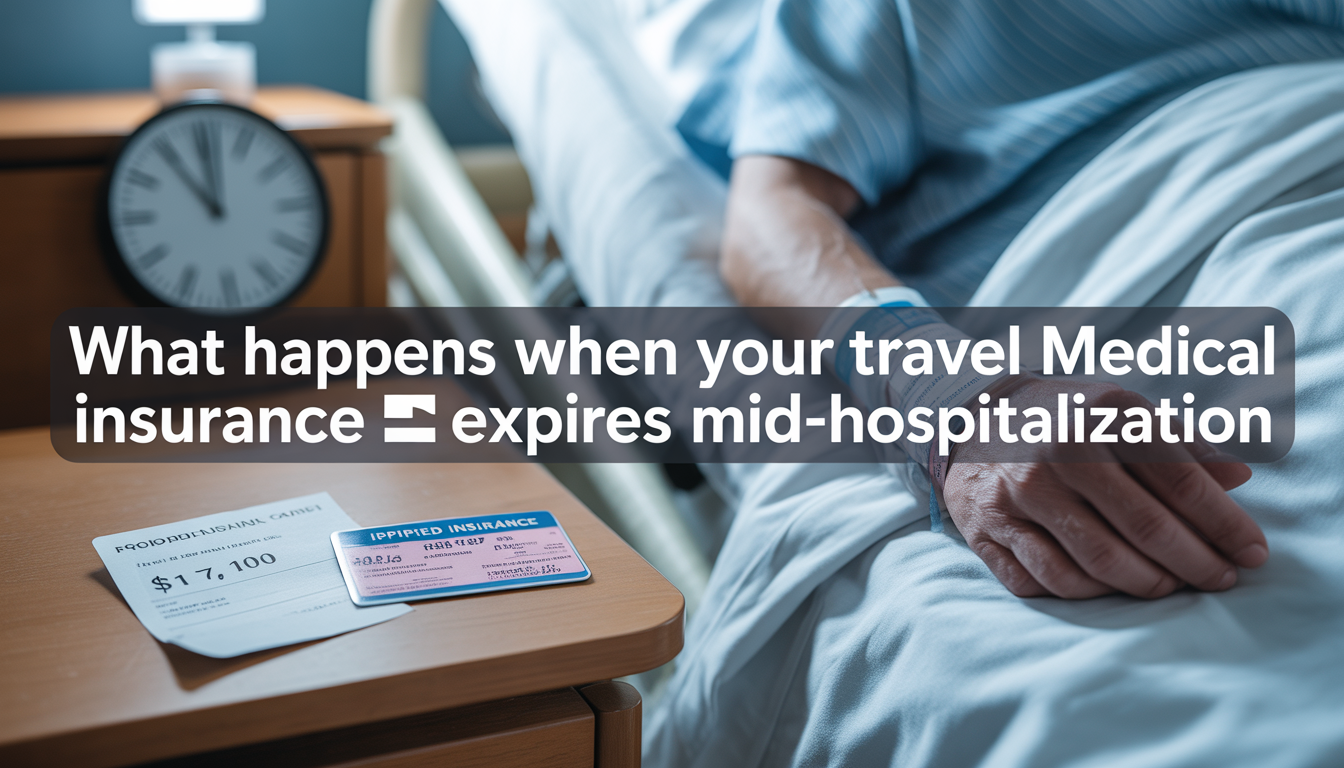
The beeping of the heart monitor was the only sound that kept me company at 3:00 AM. I was lying in a hospital bed in Bangkok, my leg elevated after emergency surgery for a complex fracture. The surgery had gone well. The nurses were kind. The morphine was doing its job.
Then my phone buzzed.
It was an email from my travel insurance provider. I opened it expecting a routine update on my claim. Instead, I read words that turned my blood cold:
“Your travel insurance policy expired today at 12:00 AM. No further benefits are available. Please arrange for payment of any ongoing medical expenses directly with the hospital.”
I stared at the screen. My policy had expired. While I was lying in a hospital bed. After surgery. With a recovery timeline of at least two more weeks.
I had purchased the policy six months before my trip. I had opted for a 180-day policy, thinking that was more than enough. I had been traveling for 179 days when the accident happened. My surgery occurred on day 180. The policy expired at midnight on day 180.
I was now uninsured. In a foreign country. With a fresh surgical wound. Facing at least two more weeks of hospitalization, physical therapy, and follow-up care.
The hospital bill was already $28,000. The projected remaining costs were another $15,000.
I was alone. I was terrified. And I had no idea what to do.
Over the next several days, I learned more about what happens when travel medical insurance expires mid-hospitalization than I ever wanted to know. I learned about payment demands, evacuation nightmares, insurance loopholes, and the terrifying reality that the policy you thought would protect you can vanish at the worst possible moment.
This is that story. It is also a guide to ensure you never experience it yourself.
The Nightmare Unfolds: My Story
Let me rewind to the beginning.
I was six months into a year-long trip through Southeast Asia. I had been diligent about insurance. I bought a comprehensive travel medical policy with $500,000 in coverage, emergency evacuation, and trip interruption benefits. I paid $487 for 180 days of coverage.
I was careful about the dates. My policy started on January 15. It would expire on July 15 at 12:00 AM. I planned to renew or buy a new policy before it expired.
Then, on July 13, I had an accident. A scooter accident. A compound fracture of my tibia and fibula. Emergency surgery on July 14. I woke up from surgery on July 15.
The policy expired while I was under anesthesia.
When I finally reached the insurance company by phone, the representative was polite but firm.
“Your policy expired at midnight last night,” she said. “We processed your surgery claim because the surgery occurred before the expiration. But ongoing hospitalization, follow-up care, physical therapy, and any complications are not covered. You are responsible for those costs.”
I asked if I could renew the policy retroactively. No.
I asked if I could buy a new policy that would cover the remaining care. No—you cannot purchase insurance for a condition that already exists.
I was trapped. I had insurance for the surgery that saved my life, but I had no coverage for the recovery that would determine whether I walked again.
What Actually Happens When Insurance Expires
If you find yourself in this situation, here is what you can expect. It is not pretty.
1. The Hospital Will Demand Payment
Within 24 hours of my insurance expiration, the hospital’s billing department appeared at my bedside. A polite woman in a crisp white uniform handed me an itemized bill and a payment demand.
“Your insurance has expired,” she said. “We need payment for the remaining estimated costs before you can be discharged. That is $15,000. We accept credit card or wire transfer.”
I had $8,000 in my savings account. I had a credit card with a $10,000 limit. I could cover the immediate bill, barely. But what about complications? What about physical therapy? What about follow-up appointments?
I paid $10,000 upfront. I negotiated to pay the remaining $5,000 over 30 days. The hospital agreed, but they held my passport as collateral.
2. You Become a Cash Patient
Once your insurance expires, you lose all the benefits that insurance provides. You become a “cash patient” or “self-pay patient.” This means:
- No negotiated rates. Insurance companies negotiate discounted rates with hospitals. Cash patients pay the full rate, which can be 2–3 times higher.
- No direct billing. Insurance companies often pay hospitals directly. Without insurance, you pay upfront and seek reimbursement later (if you have coverage).
- No medical case management. Insurance companies assign case managers to coordinate complex care. Without insurance, you are on your own.
In my case, the hospital’s “cash patient” rate was 40% higher than the rate they would have charged my insurance company. My $15,000 estimated remaining cost would have been $10,500 if I had still been insured.
3. You Lose Evacuation Coverage
Emergency evacuation coverage is one of the most valuable parts of travel medical insurance. If complications arise and you need to be moved to a better facility—or back to your home country—evacuation can cost $50,000 to $200,000.
Without insurance, that cost falls entirely on you.
I had a complication three days after my surgery. A minor infection developed at the surgical site. The hospital wanted to keep me for another week of IV antibiotics. But the infection was serious enough that if it worsened, I would need to be evacuated to Singapore for specialized care.
The evacuation would have cost $45,000. I did not have $45,000. I spent three sleepless nights praying the infection would not get worse. It did not. But the fear was paralyzing.
4. You Have No Medical Repatriation
If the worst happens and you die, medical repatriation—the cost of returning your body to your home country—can cost $10,000 to $25,000. Without insurance, your family bears that cost.
I thought about this every night for two weeks. It is not a pleasant thought.
5. Follow-Up Care Is Uncovered
Travel medical insurance typically covers the acute event—the surgery, the hospitalization. It rarely covers follow-up care after you return home. But if your insurance expires mid-hospitalization, even the acute care coverage stops.
In my case, I needed:
- Two weeks of in-hospital recovery
- Four weeks of physical therapy
- Three follow-up appointments with the orthopedic surgeon
- A second surgery to remove hardware (six months later)
None of this was covered. I paid for all of it out of pocket.
The Insurance Loophole: Why This Happens
The policy language that caused my nightmare is standard across the travel insurance industry. Here is how it typically reads:
“Coverage ends on the earlier of: (a) the expiration date shown on the Declarations page; (b) the date you return to your home country; or (c) the date you fail to pay the required premium.”
There is no exception for “if you are currently hospitalized.” There is no “grace period” for ongoing care. The policy ends at midnight on the expiration date, regardless of your circumstances.
Some policies have a “continuation of benefits” provision that extends coverage for a limited period (usually 7–30 days) if you are hospitalized at the time of expiration. But this is not standard. You must look for it specifically.
My policy had no such provision. When I asked the insurance company why, they explained: “Continuation of benefits increases premiums significantly. Most customers choose the lower premium option.”
I had chosen the lower premium option. I had saved $47 on my policy. That decision cost me $15,000.
The Anatomy of a “Continuation of Benefits” Clause
If you want to avoid my nightmare, you need to understand continuation of benefits clauses. Here is how they work.
What It Is
A continuation of benefits clause extends your coverage beyond the policy expiration date if you are already in the middle of a covered event—like a hospitalization.
Typical Terms
- Duration: Usually 7–30 days, sometimes up to 90 days
- Coverage: Typically covers the same benefits as the original policy (medical, evacuation, etc.)
- Trigger: Must be “hospitalized” or “medically unable to travel” at the time of expiration
Sample Language
“If at the time this policy expires you are hospitalized as an inpatient, we will extend your medical expense coverage until the earlier of: (a) your discharge from the hospital; or (b) 30 days from the date of expiration.”
What to Look For
When shopping for travel medical insurance, look for these specific phrases:
- “Continuation of benefits”
- “Extension of coverage while hospitalized”
- “Inpatient coverage extension”
- “Automatic extension for medical necessity”
What It Costs
Policies with continuation of benefits typically cost 10–20% more than policies without. In my case, the policy with continuation of benefits would have cost $534 instead of $487—a difference of $47.
I saved $47. It cost me $15,000.
How to Avoid the Expiration Trap
After my experience, I developed a system to ensure I never face this nightmare again. Here is what I do now.
1. Always Buy an Annual Multi-Trip Policy
If you travel frequently, an annual multi-trip policy is almost always better than buying separate policies for each trip. Annual policies typically cover all trips up to a certain duration (often 30–90 days per trip) for a full year.
Why this helps: With an annual policy, there is no single expiration date to worry about. The coverage renews automatically each year. You are never caught mid-trip without coverage.
Cost: Annual multi-trip policies typically cost $300–$800 per year, depending on coverage limits. For frequent travelers, this is cheaper than buying separate policies.
2. Add a 30-Day Buffer
If you buy trip-specific policies, add a 30-day buffer at the end. If you plan to travel for 180 days, buy a 210-day policy. The extra cost is minimal compared to the risk.
Why this helps: A buffer gives you a safety margin if your trip is delayed, if you decide to extend, or if you are hospitalized at the end of your planned stay.
Cost: Extending a policy by 30 days typically costs 10–20% of the base premium. A $500 policy becomes $550–$600.
3. Look Specifically for Continuation of Benefits
When comparing policies, go straight to the “Termination” or “Expiration” section. Look for the words “continuation of benefits” or “extension while hospitalized.” If you do not see these words, ask the insurer directly.
Why this helps: Continuation of benefits is the only provision that protects you if you are hospitalized at expiration. Without it, you are exposed.
4. Set Multiple Expiration Reminders
Do not rely on your memory. Set calendar reminders 30 days, 14 days, 7 days, and 1 day before your policy expires. If you are traveling, set them in the local time zone of your destination.
Why this helps: If you know your policy is expiring, you can take action before it happens—either renewing, extending, or buying a new policy.
5. Keep Your Insurance Card Visible
I now keep my insurance ID card as the lock screen wallpaper on my phone. I also carry a printed copy in my wallet. If I am incapacitated, medical staff can see my insurance information immediately.
Why this helps: If you are unconscious or unable to communicate, medical staff need to know your insurance details. Having them visible can prevent your policy from expiring without anyone knowing.
6. Designate an Emergency Contact
I now have a designated emergency contact—my brother—who has all my insurance information. He knows my policy numbers, my coverage dates, and my insurance company’s emergency number.
Why this helps: If you are hospitalized and unable to manage your affairs, your contact can handle insurance renewals, extensions, and communications with the hospital.
What to Do If You Find Yourself in This Situation
If you are reading this because you are currently in a hospital with expired insurance, here is what you need to do. I have been there. It is terrifying. But there are steps you can take.
Step 1: Do Not Panic
Panic leads to bad decisions. Take a breath. You are in a difficult situation, but it is manageable. Hospitals want to be paid, but they also want you to recover. They will work with you if you communicate.
Step 2: Contact Your Insurance Company Immediately
Even if your policy has expired, call the insurance company. Ask if there is any grace period. Ask if they have a continuation of benefits provision you missed. Ask if they can renew the policy retroactively (unlikely, but ask).
In some cases, insurers will cover ongoing care if the hospitalization began before expiration, even if the policy does not have a formal continuation clause. This is not guaranteed, but it is worth asking.
Step 3: Talk to the Hospital Billing Department
Go to the hospital’s billing department (or have a friend or translator go for you). Explain your situation. Ask:
- Can you apply the insurance-negotiated rate? Even without insurance, hospitals sometimes offer the same discounted rate to uninsured patients who ask.
- Can you set up a payment plan? Most hospitals will allow you to pay over time, especially if you can show financial hardship.
- Can you discount the bill for prompt payment? If you can pay a significant portion upfront, hospitals often offer 10–30% discounts.
In my case, the hospital reduced my bill by 15% when I paid $10,000 upfront. They also allowed me to pay the remaining $5,000 over 30 days.
Step 4: Contact Your Embassy
Your country’s embassy or consulate can provide assistance. They cannot pay your bills, but they can:
- Provide a list of English-speaking lawyers
- Help you communicate with the hospital
- Contact family members on your behalf
- Ensure you are treated fairly
In my case, the US Embassy in Bangkok provided a list of medical advocates who helped me negotiate with the hospital.
Step 5: Consider Medical Evacuation
If your condition is stable and you need ongoing care, consider whether medical evacuation to your home country makes sense. The cost of evacuation may be high ($50,000–$200,000), but it may be less than the cost of extended hospitalization in a foreign country with no insurance.
If you have family or friends who can help, they may be able to arrange financing. Some medical evacuation companies offer payment plans.
In my case, I was not stable enough to travel for two weeks. By the time I was stable, I had already paid for my ongoing care. I stayed in Bangkok.
Step 6: Negotiate Everything
Everything in a foreign hospital is negotiable. Room rates, medication costs, doctor fees—all of it. When you are a cash patient, you have leverage. The hospital wants to be paid. They would rather accept a reduced amount than send your bill to collections.
I negotiated:
- My room rate from $300/night to $150/night
- My physical therapy from $120/session to $60/session
- My medications from $800 total to $400 total
I saved over $5,000 simply by asking.
Step 7: Document Everything
Keep a detailed record of:
- Every bill and receipt
- Every communication with the hospital
- Every communication with your insurance company
- Every payment you make
This documentation will be essential if you need to seek reimbursement later or if you are audited by tax authorities.
Step 8: Seek Help from Family and Friends
This is not the time to be proud. If you need money, ask. Set up a GoFundMe. Ask family to help. In my case, my brother wired me $5,000 to cover the immediate payment demand.
I paid him back over six months. It was humbling, but it saved me.
The Financial Aftermath: What It Cost Me
Here is the full accounting of what my expired policy cost me:
| Expense | Amount |
|---|---|
| Surgery (covered by insurance before expiration) | $0 |
| Remaining hospitalization (2 weeks) | $9,200 |
| Physical therapy (4 weeks) | $2,400 |
| Follow-up appointments (3) | $600 |
| Second surgery (hardware removal, 6 months later) | $4,500 |
| Additional medications | $400 |
| Total out-of-pocket | $17,100 |
Plus:
- Emotional stress: Priceless
- Time spent negotiating: 40+ hours
- Time spent recovering without proper follow-up: Extended by 3 months
If I had simply bought the policy with continuation of benefits, my out-of-pocket cost would have been $0. The additional premium would have been $47.
The Insurance Product That Could Have Saved Me
After my experience, I researched policies that would have prevented this nightmare. Here are the types of coverage that protect you against mid-hospitalization expiration.
1. Annual Multi-Trip Policies with Continuation of Benefits
Best for: Frequent travelers, digital nomads
Example: World Nomads Explorer Plan (annual version)
- Continuation of benefits: Up to 90 days if hospitalized at expiration
- Cost: ~$600/year
- Coverage: $1,000,000 medical, $500,000 evacuation
2. Long-Term Travel Policies with Automatic Extension
Best for: Long-term travelers (6+ months)
Example: SafetyWing Nomad Insurance
- Continuation of benefits: Automatic extension while hospitalized
- Cost: ~$50/month
- Coverage: $250,000 medical, $100,000 evacuation
Note: SafetyWing’s policy automatically extends coverage while you are hospitalized, even if your subscription has ended. This is the policy I now use.
3. Expat Health Insurance with Worldwide Coverage
Best for: Digital nomads, expats, long-term travelers
Example: Cigna Global, Allianz Care, GeoBlue
- Continuation of benefits: Standard feature (often unlimited while hospitalized)
- Cost: $150–$500/month
- Coverage: $1,000,000–$5,000,000 medical, worldwide
These policies are designed for people who live outside their home country. They are more expensive than travel insurance, but they offer comprehensive coverage with no expiration risk.
4. Credit Card Travel Insurance with Continuation
Best for: Occasional travelers
Example: Chase Sapphire Reserve, American Express Platinum
- Continuation of benefits: Some cards include automatic extension while hospitalized
- Cost: Included with card annual fee ($450–$695)
- Coverage: Typically $50,000–$100,000 medical (lower than dedicated policies)
Note: Credit card travel insurance often has lower limits than dedicated policies. For serious medical events, it may not be sufficient.
What to Look for in Your Policy: A Checklist
Before you buy any travel medical insurance, use this checklist to ensure you are protected against mid-hospitalization expiration.
1. Continuation of Benefits
- Does the policy have a continuation of benefits clause?
- How long is the extension period? (7 days? 30 days? 90 days?)
- Does the extension cover all benefits (medical, evacuation, etc.) or only inpatient care?
2. Policy Duration
- Does the policy cover the entire duration of my trip, plus a buffer?
- Can I extend the policy mid-trip if I decide to stay longer?
3. Renewal Options
- Can I renew the policy if I am already abroad?
- Can I renew if I have an active claim?
- What is the process for renewal?
4. Medical Evacuation
- Does evacuation coverage continue during the extension period?
- What is the evacuation limit?
- Does the policy cover evacuation to my home country or only to the nearest adequate facility?
5. Pre-Existing Conditions
- Does the policy cover pre-existing conditions?
- If not, what is the look-back period?
- Does the continuation of benefits apply to pre-existing conditions?
6. Hospitalization Definition
- What constitutes “hospitalization” for purposes of continuation?
- Does outpatient care qualify?
- Does rehabilitation or physical therapy qualify?
Real Stories: Others Who Lived Through This
My story is not unique. I have since connected with other travelers who faced the same nightmare.
The Appendicitis in Vietnam
James, a British traveler, was hospitalized for appendicitis in Ho Chi Minh City. His policy expired three days into a five-day hospitalization. His policy had no continuation clause. He paid $8,000 out of pocket. He spent the next year paying it off.
The Motorcycle Accident in Bali
Maria, a German digital nomad, was in a motorcycle accident in Bali. She had surgery, then developed complications. Her policy expired during the complications. The hospital demanded $12,000 before releasing her. She had to ask family to wire money. She now has a GoFundMe page to pay back the debt.
The Heart Attack in Mexico
Robert, an American retiree, had a heart attack while vacationing in Mexico. He had emergency surgery. His policy expired three days after the surgery. The hospital demanded $45,000 for ongoing care. Robert’s family had to sell his car to pay the bill. He survived, but his retirement savings were devastated.
In every case, the travelers had the same regret: they did not check for continuation of benefits. They assumed the policy would cover them until they were discharged. They were wrong.
The Legal Reality: Can You Sue?
If your policy expires mid-hospitalization and you suffer financial harm, you may wonder if you have legal recourse.
The answer is: probably not.
Insurance policies are contracts. If the policy clearly states that coverage ends on a specific date, and you agreed to that date, the insurance company has no obligation to continue coverage.
However, there are limited exceptions:
- If the policy language is ambiguous. If the policy does not clearly state that coverage ends regardless of hospitalization, a court may interpret the ambiguity in your favor.
- If the insurer misrepresented the policy. If your broker told you that you would be covered until discharge, and the policy says otherwise, you may have a claim for misrepresentation.
- If the insurer failed to provide the policy document. If you were never given the full policy language and relied on marketing materials, you may have an argument.
But these cases are rare. In the vast majority of situations, the expiration date is enforced as written.
The Digital Nomad Solution: What I Use Now
After my experience, I switched to a coverage model that eliminates the expiration risk entirely.
My Current Coverage
| Policy | Type | Cost | Key Feature |
|---|---|---|---|
| SafetyWing Nomad Insurance | Travel medical | $50/month | Automatic extension while hospitalized |
| Cigna Global | International health | $180/month | Worldwide coverage, no expiration |
| MedJet Assist | Evacuation membership | $300/year | Evacuation to hospital of choice |
| Chase Sapphire Reserve | Credit card coverage | $550/year | Secondary coverage, trip protection |
Total annual cost: ~$3,500
This is more expensive than a single travel insurance policy. But it gives me:
- No expiration risk. Both SafetyWing and Cigna continue coverage while I am hospitalized.
- Worldwide coverage. I am covered in every country I visit.
- High limits. $2,000,000+ in medical coverage.
- Evacuation to my choice. MedJet will evacuate me to any hospital I choose, not just the nearest adequate facility.
For me, this is worth the cost. The peace of mind alone is priceless.
Conclusion: The $47 Lesson That Cost $17,100
I started this article with a story about a beeping heart monitor and an email that changed everything. I ended it with a detailed guide to avoiding the trap that caught me.
The lesson is simple: read the expiration provisions of your travel insurance policy before you buy.
Do not assume you are covered until you are discharged. Do not assume the policy will extend if you are hospitalized. Do not assume the expiration date is just a formality.
It is not. The expiration date is the moment your coverage ends. If you are in a hospital bed when that moment comes, you are on your own.
I saved $47 by choosing a policy without continuation of benefits. That decision cost me $17,100.
I hope this article helps you make a better decision. Buy the policy with continuation of benefits. Add a buffer to your coverage. Set expiration reminders. Designate an emergency contact. Do all of it.
Because when you are lying in a hospital bed in a foreign country, the last thing you want to worry about is whether your insurance expired while you were under anesthesia.