
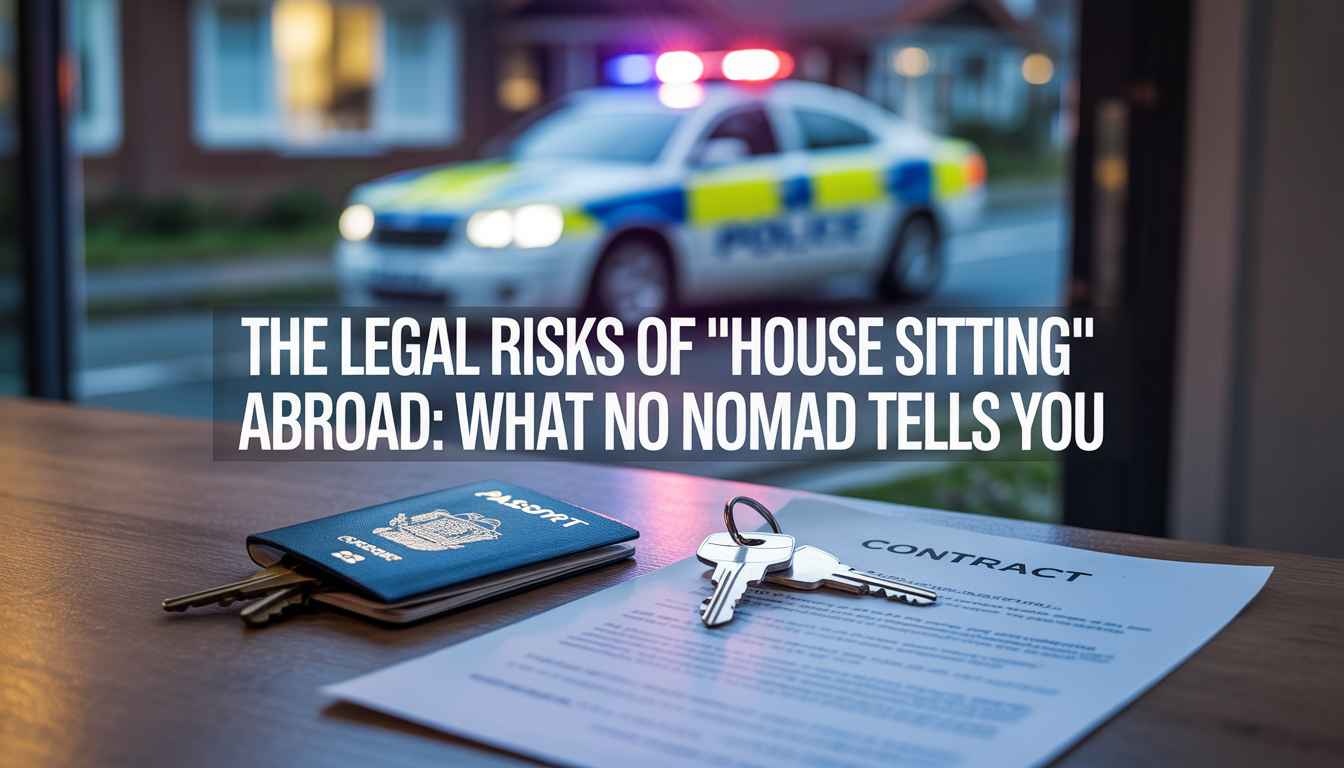
The message arrived on WhatsApp at 2:34 AM. It was from a fellow digital nomad I had met in a coworking space in Medellín six months earlier. Her name was Sarah. She was Australian, 29 years old, and had been house sitting across South America for nearly two years.
The message was short, but it sent a chill down my spine:
“Hey, I need your help. The police are here. The homeowners are saying I stole from them. I’m being detained. I don’t know what to do.”
I called her immediately. Her voice was shaking. She was sitting in a police station in a small town in Colombia, surrounded by officers who spoke limited English, accused of theft from a house she had been sitting for three weeks.
She had done everything right. She had found the sit on a popular house sitting platform. She had video calls with the homeowners. She had five-star reviews from previous sits. She had no idea that a misunderstanding about a missing necklace would land her in a foreign police station, facing potential criminal charges.
I spent the next 48 hours helping her find a local lawyer, communicating with the homeowners, and eventually securing her release. The charges were dropped. But the experience cost her $2,300 in legal fees, three days of missed work, and a level of stress she said she would never forget.
That was the moment I realized that house sitting abroad—something promoted as a “free accommodation hack” for digital nomads—carries serious legal risks that almost no one talks about.
Over the next several thousand words, I am going to expose exactly what those risks are. I will walk you through real cases, the legal frameworks that govern house sitting in different countries, the contractual loopholes that can leave you exposed, and—most importantly—how to protect yourself before you ever accept a house sitting assignment abroad.
The House Sitting Boom: How It Became the Nomad Dream
House sitting has exploded in popularity over the past decade. Platforms like TrustedHousesitters, Nomador, and HouseSittersAmerica have created a global marketplace connecting homeowners with travelers willing to care for their homes and pets in exchange for free accommodation.
For digital nomads, it seems like the perfect arrangement:
- Free rent in expensive cities
- Local experiences beyond tourist areas
- The comfort of a home instead of a hostel or hotel
- The opportunity to care for animals (a bonus for pet lovers)
I have done it myself. I have house sat in Barcelona, Lisbon, Chiang Mai, and Buenos Aires. I have cared for dogs, cats, and once—memorably—a flock of chickens. For the most part, my experiences were positive. I saved thousands of dollars in accommodation costs. I made genuine connections with homeowners. I lived like a local in ways that hotels never allow.
But after Sarah’s experience, I started digging deeper. I talked to lawyers. I read case law. I interviewed other house sitters who had faced legal trouble. What I found was disturbing.
House sitting exists in a legal gray area in almost every country. It is not recognized as a formal tenancy. It is not regulated by consumer protection laws. It operates on trust—and when that trust breaks, the legal consequences can be severe.
The Legal Gray Area: What Is House Sitting, Legally Speaking?
The first problem is that no country has a specific legal category for “house sitting.” Depending on the jurisdiction, a house sitter can be classified as:
- A guest
- A licensee
- A tenant
- A bailee (responsible for the homeowner’s property)
- An employee (if any compensation is involved)
- A trespasser (if the arrangement goes wrong)
Each classification carries different legal rights and obligations. And here is the kicker: you do not get to choose the classification. If a dispute arises, a judge will determine your status based on the facts of your situation. And that determination will dictate whether you have tenant protections, whether you can be evicted immediately, whether you are liable for damages, and whether you can face criminal charges.
Guest vs. Licensee vs. Tenant
In common law countries (the US, UK, Australia, Canada, etc.), the distinction matters enormously:
- Guest: You are there at the homeowner’s invitation with no expectation of exclusive possession. You can be asked to leave at any time. You have virtually no legal protections.
- Licensee: You have permission to be on the property, but you do not have exclusive possession. This is the most common classification for house sitters. You can be evicted with reasonable notice (often 24–72 hours), but you have minimal tenant protections.
- Tenant: You have exclusive possession of the property. You are protected by landlord-tenant laws, which in many jurisdictions require formal eviction proceedings, notice periods of 30–60 days, and court involvement. House sitters almost never qualify as tenants unless they pay rent or stay for an extended period.
In my research, I found that house sitters are almost always classified as licensees. This means:
- You can be asked to leave with little notice
- You have no right to remain if the homeowner changes their mind
- You can be removed by police if you refuse to leave
- You have no recourse for wrongful eviction
This creates enormous vulnerability. If a homeowner accuses you of something—whether true or false—they can simply lock you out and call the police. You have no legal right to re-enter. You have no right to a hearing. You are, in the eyes of the law, a guest who overstayed their welcome.
The Criminal Risk: When Accusations Become Charges
Sarah’s case was terrifying because it involved criminal accusations. She was accused of theft. The homeowners claimed that a diamond necklace was missing after she left. Sarah swore she never saw the necklace. There was no evidence either way.
But in Colombia, as in many countries, a criminal accusation is enough to trigger an investigation. Sarah was detained for 36 hours before a lawyer could secure her release. The charges were eventually dropped for lack of evidence, but the damage was done.
Here are the criminal risks every house sitter faces:
1. Theft Allegations
This is the most common criminal accusation against house sitters. Homeowners may claim that valuables went missing during your stay. Whether the items were actually stolen, lost, or never existed, you can find yourself facing theft charges.
In many countries, theft allegations are taken seriously. You can be detained, your passport can be seized, and you can be prevented from leaving the country until the matter is resolved. Even if you are innocent, the legal process can take months and cost thousands of dollars.
2. Property Damage Allegations
If something breaks or is damaged during your stay, homeowners may claim you were negligent or reckless. In some jurisdictions, this can lead to criminal charges for “criminal damage” or “malicious mischief,” especially if the homeowner alleges the damage was intentional.
3. Trespassing
If a homeowner accuses you of staying beyond the agreed dates, or if there is any dispute about the duration of your stay, you can be charged with trespassing. This is particularly dangerous if you are in a country where trespassing carries serious penalties.
4. Immigration Violations
This is a risk that almost no house sitter considers. In many countries, house sitting may be considered “work” under immigration law. If you are in the country on a tourist visa, engaging in house sitting could be viewed as unauthorized employment. If immigration authorities find out, you can be detained, deported, and banned from re-entering.
I spoke with a house sitter who was detained at the airport in Thailand because immigration officials saw house sitting messages on her phone. She was questioned for six hours, accused of working illegally, and eventually deported at her own expense. She was banned from Thailand for five years.
5. Animal-Related Liability
If you are caring for pets, you can face criminal liability if the animals are harmed, lost, or if they harm someone. In some jurisdictions, animal cruelty is a criminal offense with serious penalties. If a dog escapes and bites someone while under your care, you could face criminal charges.
The Civil Risk: When Lawsuits Follow You Home
Criminal charges are terrifying, but civil liability can be equally devastating. Even if you are never charged criminally, you can be sued by homeowners for damages.
Here is what civil liability can look like:
1. Damage Claims
Homeowners can sue you for property damage. Even if the damage was accidental, you can be held liable if the homeowner alleges negligence. A broken vase, a stained carpet, a scratched floor—these can become the basis for lawsuits seeking thousands of dollars in compensation.
2. Loss of Value Claims
Some homeowners may claim that your presence reduced the value of their property. This is rare, but I have heard of cases where homeowners claimed that house sitters “diminished the value” of a luxury property through ordinary wear and tear.
3. Emotional Distress Claims
If a homeowner claims that your conduct caused them emotional distress—for example, if they allege you violated their privacy or damaged sentimental items—they may sue for emotional damages.
4. Contract Claims
If you and the homeowner had a written agreement (most platforms provide a basic contract), you can be sued for breach of contract if the homeowner alleges you violated any term.
5. Subrogation Claims
If the homeowner’s insurance company pays for damage they claim you caused, the insurance company can pursue you for reimbursement through a process called subrogation. Insurance companies have deep pockets and aggressive legal teams.
The scariest part? These lawsuits can follow you home. If a homeowner obtains a judgment against you in a foreign court, they may be able to enforce that judgment in your home country, depending on international treaties and local laws.
The Insurance Gap: When No One Is Covered
One of the biggest misconceptions about house sitting is that the homeowner’s insurance covers you. It usually does not.
Most homeowners’ insurance policies:
- Do not cover damage caused by house sitters (the policyholder is responsible)
- Do not cover theft by house sitters (this is excluded as “theft by a person in your care”)
- Do not cover liability for injuries sustained by house sitters
- May require the homeowner to have “unoccupied property” coverage if the home is vacant for extended periods
If you are house sitting and you accidentally start a fire, the homeowner’s insurance may deny the claim because the damage was caused by a non-resident. You could be personally liable for the full cost of repairs.
Similarly, if you are injured while house sitting—if you fall down the stairs, if you are bitten by the homeowner’s dog, if you get food poisoning from the kitchen—you have no workers’ compensation coverage. You would need to rely on your own travel insurance, which may exclude injuries sustained while “working” (and remember, immigration authorities may consider house sitting work).
The Platform Problem: What House Sitting Websites Don’t Tell You
House sitting platforms present themselves as safe, trusted communities. They offer reviews, dispute resolution processes, and sometimes insurance. But the protections are far weaker than most users realize.
TrustedHousesitters
TrustedHousesitters is the largest platform. They offer a “peace of mind” guarantee that includes:
- 24/7 emergency support
- A dispute resolution team
- Up to $1,000,000 in public liability insurance for members in some countries
But read the fine print. The public liability insurance only covers you if you are sued for injuring someone or damaging property. It does not cover:
- Theft allegations against you
- Your own injuries
- Your own belongings
- Legal defense costs if you are accused of a crime
- Immigration issues
Moreover, the insurance is secondary—it only pays after the homeowner’s insurance has been exhausted. And it has exclusions that can leave you exposed.
Other Platforms
Smaller platforms offer even less protection. Most simply provide a matching service and wash their hands of any disputes. Their terms of service typically state that they are not responsible for the conduct of homeowners or sitters, and that users assume all risks.
The Review Illusion
Reviews create a false sense of security. A homeowner with 20 five-star reviews seems trustworthy. But reviews only tell you about past sits—they do not predict what will happen during your sit. I have heard of homeowners with excellent reviews who later made false accusations against sitters. The reviews reflected the experiences of previous sitters, but they did not prevent a dispute from arising.
Country-Specific Risks: Where House Sitting Is Most Dangerous
The legal risks of house sitting vary enormously by country. Based on my research and interviews, here are the countries where house sitters face the highest risks:
Colombia
As Sarah’s case illustrates, Colombia has a legal system where criminal accusations are taken seriously and can lead to immediate detention. The country also has strict immigration enforcement, and house sitting can be viewed as unauthorized work.
Mexico
Mexico has a complex legal system with significant variation between states. House sitters have been accused of theft, overstaying, and engaging in “unauthorized business activities.” The country also has strict rules about foreigners staying in residential properties.
Thailand
Thailand aggressively enforces its immigration laws. House sitting is almost certainly considered “work” under Thai law, and doing it on a tourist visa is illegal. Several house sitters have been deported and banned from re-entering.
Turkey
Turkey has strict property laws and a legal system that can be slow and unpredictable. House sitters have faced accusations of property damage and overstaying, with legal processes that can take months.
Italy
Italy has complex property laws and a strong emphasis on formal contracts. House sitters who stay for extended periods have been classified as tenants under Italian law, triggering tenant protections—but also exposing homeowners to tax liabilities, creating conflict.
United Arab Emirates
The UAE has extremely strict laws. Accusations of theft or property damage can lead to immediate detention, travel bans, and serious criminal penalties. House sitting is also likely considered work requiring a proper visa.
Australia
Australia has strong tenant protections, but house sitters usually do not qualify as tenants. Disputes can lead to police involvement, and immigration authorities closely monitor visitors who appear to be working.
The Horror Stories: Real Cases from Real Nomads
Over the past year, I have collected stories from house sitters who faced legal trouble abroad. Here are three that illustrate the risks.
Case 1: The Accused Thief in Portugal
Emma, a British digital nomad, house sat for a family in Lisbon for two weeks. When the family returned, they claimed a gold bracelet was missing. Emma said she never saw it. The family filed a police report. Emma was questioned by police, had her passport recorded, and was told she could not leave Portugal until the investigation was complete. She spent six weeks in Portugal waiting for the investigation to close. The charges were dropped due to lack of evidence, but Emma lost six weeks of travel, paid €1,500 in legal fees, and suffered severe anxiety.
Case 2: The Locked-Out Nomad in Mexico
Carlos, a Mexican-American digital nomad, house sat for a couple in Puerto Vallarta. The couple had a disagreement with Carlos about the dates—they said he overstayed by two days, he said they had agreed to the extension. While Carlos was at a coworking space, the couple changed the locks, packed his belongings into trash bags, and left them outside. When Carlos returned, he found himself locked out with no access to his laptop, passport, or medications. The police refused to intervene, saying it was a civil matter. Carlos spent three days in a hostel, paid $400 for a lawyer, and eventually retrieved his belongings after threatening to sue.
Case 3: The Deported Digital Nomad in Thailand
James, an American digital nomad, house sat for a British expat in Chiang Mai for three months. He was on a tourist visa. During a routine immigration check, officers asked about his accommodation. When he explained he was house sitting, they questioned him for hours, searched his phone, and found messages about the arrangement. They determined he was “working” without a work permit. He was detained for 48 hours, deported at his own expense ($1,200), and banned from Thailand for five years.
How to Protect Yourself: A Legal Checklist for House Sitters
After researching these risks and speaking with lawyers in multiple countries, I have developed a checklist for house sitters. If you are going to house sit abroad, these steps are essential.
1. Create a Written Agreement
Do not rely on the platform’s standard terms. Create a separate written agreement that clearly states:
- The exact dates of the sit (including check-in and check-out times)
- The responsibilities of the sitter (pet care, mail collection, plant watering, etc.)
- The responsibilities of the homeowner (providing clear instructions, emergency contacts, etc.)
- A process for resolving disputes
- A clear statement that the sitter is a guest and not a tenant
- Acknowledgment that the homeowner’s insurance is in effect
- Acknowledgment that the sitter has their own travel insurance
Both parties should sign this agreement and keep a copy. This document can be critical if a dispute arises.
2. Document Everything
Before the homeowners leave, do a thorough video walkthrough of the property. Narrate the video as you go. Show the condition of every room, every piece of furniture, every appliance. If there are existing damages, document them clearly.
Do the same walkthrough when the homeowners return, before you leave. This documentation can protect you if the homeowners later claim damage or theft.
3. Understand Local Immigration Law
Before you accept a house sit in any country, research whether house sitting is considered “work” under local immigration law. In many countries, it is. If you are on a tourist visa, you may be violating the terms of your entry.
If you plan to house sit frequently, consider obtaining a visa that permits remote work or volunteer activities. Some countries offer digital nomad visas that explicitly allow remote work.
4. Verify Insurance Coverage
Ask the homeowner to provide proof of their insurance. Confirm that their policy covers:
- Damage caused by guests or sitters
- Theft
- Liability for injuries to sitters
At the same time, ensure your own travel insurance includes:
- Legal defense coverage (covers attorney fees if you are accused of a crime)
- Personal liability coverage (covers damages you are found liable for)
- Medical coverage
- Evacuation coverage
5. Secure Your Valuables
Do not leave your passport, laptop, or other valuables unattended in the home. If a theft occurs and the homeowner claims something is missing, you do not want to be in a position where you cannot prove your own belongings are yours.
Consider using a portable safe or lockbox for your passport and important documents.
6. Keep Communication in Writing
Whenever possible, communicate with homeowners through the platform’s messaging system or via email. Keep a record of all agreements, changes, and instructions. If a dispute arises, you will have a paper trail.
7. Have an Exit Strategy
Before you accept a sit, ask yourself: what happens if this goes wrong? Do you have enough money to book emergency accommodation? Do you have a lawyer’s contact information in the country? Do you have a friend or family member who can help?
Having an exit strategy is not pessimistic—it is prudent. I always keep enough money in a separate account to cover a week of emergency accommodation and a flight home. I also save the contact information for a local English-speaking lawyer in every country where I house sit.
8. Know Your Rights
Research the laws in the country where you will be sitting. Understand the difference between a guest, a licensee, and a tenant. Know what rights you have if you are asked to leave. Know what the police can and cannot do.
In many countries, police will not intervene in what they consider “civil disputes.” If a homeowner locks you out, the police may tell you to get a lawyer. Knowing this in advance allows you to prepare.
9. Consider a Local SIM Card
Having a local phone number makes it easier to communicate with lawyers, emergency services, and the platform’s support team. It also ensures you are not dependent on Wi-Fi in an emergency.
10. Trust Your Gut
If a house sitting arrangement feels off, trust that feeling. If the homeowner seems disorganized, if the instructions are vague, if the property is in poor condition, if the reviews are suspicious—walk away. There will always be another sit.
The Role of Travel Insurance: What to Look For
Travel insurance is your safety net, but only if you have the right coverage. When choosing a policy for house sitting, look for:
Legal Defense Coverage
This is critical. Legal defense coverage pays for attorney fees if you are accused of a crime. Without it, you could face thousands of dollars in legal fees.
Some policies include legal defense as a standard feature. Others offer it as an add-on. Some exclude coverage for criminal matters entirely. Read carefully.
Personal Liability Coverage
Personal liability coverage pays if you are found legally responsible for property damage or injury to others. This is essential for house sitters.
Make sure the coverage limit is high—at least $1,000,000. Property damage claims can escalate quickly, especially if the home is high-value.
Medical Coverage
Make sure your policy covers medical treatment in the country where you are sitting. Some policies exclude coverage for “volunteer activities,” which could include house sitting. Check the exclusions.
Evacuation Coverage
If you are in a remote area, evacuation coverage can be a lifesaver. Make sure your policy includes emergency medical evacuation with a high limit.
Trip Interruption Coverage
If your house sitting arrangement falls apart and you need to leave suddenly, trip interruption coverage can cover the cost of last-minute flights and accommodation.
Exclusions to Watch For
Read the exclusions section carefully. Common exclusions that affect house sitters include:
- Exclusions for “volunteer activities”
- Exclusions for “unattended property”
- Exclusions for “criminal acts” (even if you are accused and later exonerated, the policy may not cover legal defense)
- Exclusions for countries with travel advisories
When to Say No: Red Flags in House Sitting Arrangements
Not every house sitting opportunity is worth the risk. Here are red flags that should make you decline:
- The homeowner wants to keep the arrangement off-platform. This often means they want to avoid the platform’s dispute resolution process and insurance.
- The homeowner is vague about the dates or responsibilities. Clarity is essential. If the homeowner cannot be precise, the risk of dispute increases.
- The property contains high-value items that are not secured. If the homeowner has expensive jewelry, art, or electronics in plain sight, you are being set up as a potential suspect if anything goes missing.
- The homeowner asks you to receive mail or packages. This can create legal complications, especially if the packages contain controlled substances or items subject to customs duties.
- The homeowner has unrealistic expectations. If they expect you to be on the property 24/7, perform heavy maintenance, or care for aggressive animals, the arrangement is likely to lead to conflict.
- The reviews are too perfect. A homeowner with dozens of five-star reviews but no detailed feedback may have curated their profile. Look for detailed, specific reviews that mention the actual experience.
- The sit is in a country with unstable legal systems or aggressive immigration enforcement. If the country has a reputation for detaining foreigners or prosecuting minor offenses, think twice.
What to Do If You Find Yourself in Legal Trouble
If you are house sitting abroad and find yourself facing legal trouble, here is what to do:
1. Do Not Panic
Panic leads to poor decisions. Take a breath. You have rights, even in a foreign country. The situation is scary, but it can be managed.
2. Do Not Leave the Country
If you are accused of a crime, leaving the country can be interpreted as flight. It can also trigger an Interpol notice or a ban from re-entering. Stay put until you have legal advice.
3. Contact Your Embassy
Your country’s embassy or consulate can provide assistance. They can:
- Provide a list of English-speaking lawyers
- Contact family members on your behalf
- Ensure you are treated fairly by local authorities
- Monitor your case
Embassies cannot get you out of legal trouble, but they can provide critical support.
4. Hire a Local Lawyer
Do not try to navigate the legal system alone. Hire a local lawyer who specializes in criminal defense or civil litigation. Your embassy can provide a list of recommended attorneys.
5. Document Everything
Keep a record of all communications, including messages from the homeowner, emails from the platform, and notes from police interactions. This documentation will be essential for your lawyer.
6. Contact the House Sitting Platform
If you used a platform, contact their emergency support line. They may be able to mediate or provide documentation that helps your case.
7. Protect Your Passport
Do not surrender your passport unless required by law. If authorities seize your passport, get a receipt. A seized passport is often used to prevent you from leaving the country while an investigation is ongoing.
8. Consider Your Insurance
If you have legal defense coverage, contact your insurance provider immediately. They can provide guidance on how to access coverage and may have a network of local lawyers.
Conclusion: The Truth About House Sitting Abroad
House sitting abroad is a wonderful way to travel. I have done it. I have loved it. I have saved thousands of dollars and made lasting connections.
But the legal risks are real. They are rarely discussed in the glowing blog posts and YouTube videos that promote house sitting as a “free accommodation hack.” The platforms do not emphasize them. The house sitting community often downplays them.
I am not telling you to stop house sitting. I am telling you to do it with your eyes open.
Understand the legal gray area you are entering. Protect yourself with written agreements. Document everything. Secure your own insurance. Know the laws of the country you are visiting. Have an exit strategy. Trust your gut.
Sarah, the woman whose message started this journey, eventually recovered from her experience. She still house sits, but she does it differently now. She always has a written agreement. She always does a video walkthrough. She always knows a local lawyer. She says the experience cost her money and stress, but it taught her to take her safety seriously.
I hope this article does the same for you. House sitting can be amazing. But it is not risk-free. And the risks—criminal accusations, civil lawsuits, immigration violations, financial ruin—are too serious to ignore.
Go. Explore. House sit. But do it smart. Do it protected. And never forget that in the eyes of the law, you are not a tenant, not a guest, not a resident. You are something in between. And that gray area can turn dark very quickly.